How to Choose the Right Rivets and Riveting Machines: A Complete Manufacturing Guide
Table of Contents
- 1. Introduction: The Power of Fastening in Modern Industry
- 2. How to Choose the Right Riveting Machine for Your Factory
- 3. Where and How to Purchase a Riveting Machine
- 4. How to Design a Proper Rivet for Production
- 5. Common Types of Cold-Formed Rivets and Rivet Heads
- 6. HZX Non-Standard Customization Process and Benefits
- 7. Industry Applications and Real-World Success Cases
- 8. Conclusion: Start Your Automation Journey with HZX
1. Introduction: The Power of Fastening in Modern Industry
Are you looking for the best ways to connect metal sheets, plastic parts, or leather goods in your factory?
Every year, millions of products rely on tiny metal parts called rivets to stay together under pressure. From the sleek dashboard of your car to the heavy metal frame of a folding chair, cold-formed fasteners play a critical role in modern manufacturing. If these small parts fail, the whole product breaks. Pairing high-quality rivets with reliable riveting machines is essential for efficiency, strength, and product durability. When you use the wrong machine, you waste time, destroy raw materials, and lose money every single day.
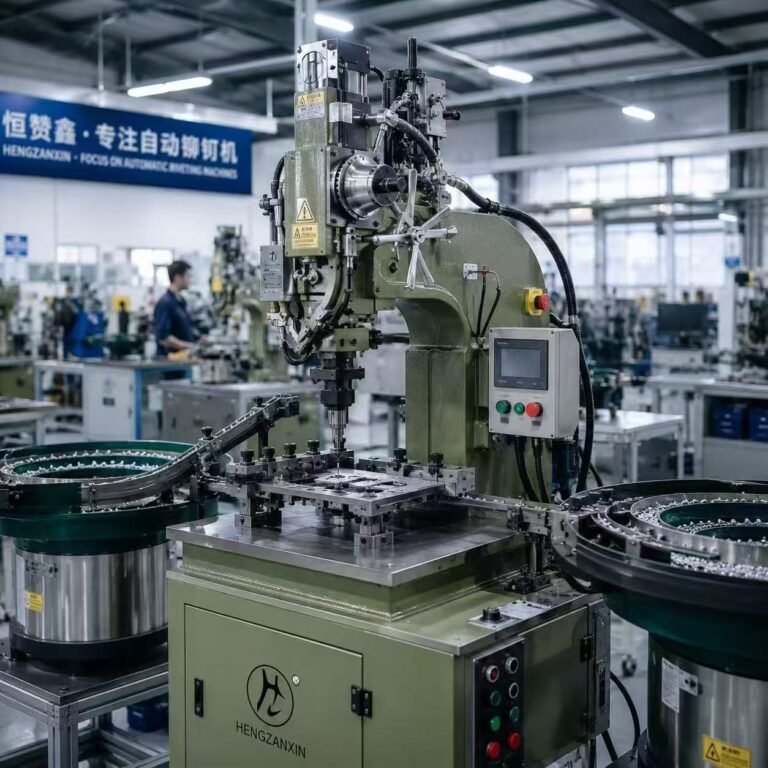
We are Hengzanxin (HZX) Rivet Machinery, a specialized source factory located in Houjie, Dongguan, Guangdong, China. Dongguan is a famous global hub for industrial manufacturing. We have over 20 years of expertise in industrial riveting and automation solutions. Our team operates a modern 3,000-square-meter facility with advanced CNC machine tools. We make standard machines and custom equipment. We design custom feeding molds based on your specific drawings. This approach gives you a “plug-and-play” experience that delivers superior ROI for your workshop.
This ultimate guide will teach you how to choose the right tools. We will cover machine types, rivet designs, purchase strategies, and real manufacturing examples. Our goal is to help you boost your production speed and eliminate factory downtime.
2. How to Choose the Right Riveting Machine for Your Factory
Why Machine Selection Dictates Your Profit Margin
You cannot buy a random machine and expect it to work with every material. You must look at several key selection factors before you spend your budget. First, look at the materials you want to join together. Hard steel requires massive force. Soft leather or thin plastic needs a gentle touch. Second, look at your production volume. Do you need to set 500 rivets a day, or 50,000 rivets a day? Third, check your precision requirements. Electronics need exact placement. Heavy hardware allows for slightly larger tolerances. Fourth, consider the automation level. Do you want a worker to feed every part by hand, or do you want a fully automated line? Finally, check your specific tooling needs for unusual shapes.
The Three Main Riveting Processes Explained
Different jobs require different mechanical actions. There are three main methods in modern factories. Impact riveting is the fastest method because it takes less than 1 second per rivet. The machine drops a heavy force straight down to deform the rivet instantly. It is great for solid metal and fast assembly lines. Orbital riveting uses a spinning tool that moves around the rivet head at a slight angle. This process creates smooth heads and protects delicate parts. Radial riveting is the most precise method. The tool moves in an eleven-loop pattern. It applies very low stress, so it is perfect for fragile materials or high-precision electronics.
Let us look at a quick comparison table of these industrial processes:
| Riveting Process | Average Speed | Material Stress Level | Best Application |
|---|---|---|---|
| Impact Riveting | Under 1 second | High Stress | Hardware, folding chairs, steel plates |
| Orbital Riveting | 2 to 3 seconds | Medium Stress | Delicate hardware, smooth finishes |
| Radial Riveting | 3 to 5 seconds | Very Low Stress | High-precision electronics, fragile parts |
HZX Machine Model Recommendations
We build specific models for specific industrial tasks. If you run a high-volume hardware shop, you need our HZX-R250SA Heavy Duty Automatic Twin Riveting Machine. It sets two rivets at the exact same time. For massive steel projects, the HZX-DR5TDA 5-Ton Heavy Duty Automatic Double Head Riveting Machine provides incredible hydraulic pressure. If you work with thin materials like bags or tags, choose the HZX-E150TA Automatic Tabletop Eyelet Punching Machine or the HZX-E135TA Automatic Tabletop Eyelet Grommet Machine. For complex metal parts, we offer the HZX-R250-3SA Automatic Triple-Head Hardware Riveting Machine to fix three spots at once. We also make the HZX-O04TP Pneumatic Tabletop Orbital Riveting Machine for delicate jobs that need a smooth finish.
Understanding Machine Categories and Power Sources
Riveting machines utilize different power sources to generate pressure. Pneumatic machines use compressed air. They are clean, fast, and excellent for light metals or plastics. Hydraulic machines use oil fluid pressure. They generate massive force for thick steel plates. Servo-driven systems use precise electric motors. They give you total control over depth and speed, which is ideal for expensive electronic parts. You can buy tabletop models to save space on small benches. You can buy floor-standing models for heavy industrial work. For the largest factories, we link multiple systems together to build fully automated production lines that run without human assistance.
When Should You Use Manual Riveting Tools?
Automatic machines are great, but they are not always necessary. You should use manual riveting tools if you have a low-volume workshop or do basic maintenance work. If you only fix ten broken chairs a week, a small hand tool is enough. Manual tools are cheap and portable. But, you should not use them for mass production. Hand tools cause worker fatigue, create inconsistent rivet heads, and slow down your output. If your business is growing, you must upgrade to automatic machines to keep your quality stable.
3. Where and How to Purchase a Riveting Machine
The Major Benefits of Buying Direct From the Source Factory
Many buyers make the mistake of purchasing equipment from local trading companies or middleman websites. If you want the best deal, you must buy directly from a source factory like HZX. Middlemen add hidden fees to the price to make a profit. A factory gives you honest industrial pricing. Factories also control the entire manufacturing schedule, so we deliver your machines much faster. Most importantly, middleman companies cannot change the machine design. A source factory can alter the metal molds to match your parts perfectly.
Why In-House R&D and Customization Matter
Industrial parts come in thousands of unique shapes. A standard machine off the shelf will often jam if your rivets are slightly wider or longer than usual. This is why you must choose a partner with strong in-house R&D capabilities. Our engineering team studies your materials before we build anything. We create non-standard customization solutions so the machine fits your exact product line. If a manufacturer does not have its own engineering team, you will end up with a useless machine that breaks your parts.
How to Evaluate a Global Machinery Supplier
Do not look at the price tag alone when you search for a supplier. You must evaluate their long-term support systems. Use this checklist to check any machinery vendor:
- Do they offer a real warranty for high-precision components?
- What is their technical response time when a machine stops working?
- Do they understand international shipping rules and customs paperwork?
- Can they supply spare parts quickly when a mold wears out?
The HZX Advantage for International Buyers
We design our entire business model to protect global buyers from factory risks. HZX provides a full 1-year warranty on all high-precision industrial fastening equipment. We offer 24/7 technical support with a fast 12-to-24-hour response window for custom quotes. We keep a massive ready stock of standard machines and feeding molds in our Dongguan warehouse. This stock allows us to ship standard orders almost immediately. We pack every machine in robust, export-standard wooden crates. This packaging protects the mechanical sensors from sea moisture and rough handling. When the machine arrives at your workshop, it is a true plug-and-play solution. You just connect the power and air, and you can start your production right away.
4. How to Design a Proper Rivet for Production
The Core Measurements of a Rivet
If you want a strong joint, you must design your rivet with exact dimensions. You need to calculate four basic measurements. First is the shank diameter. If the shank is too thin, it will snap under load. If it is too thick, it will not fit through your workpiece holes. Second is the total length. The rivet must be long enough to pass through your materials and leave extra metal at the bottom to form a secure head. Third is the head design, which keeps the rivet from pulling through the top layer. Fourth is the internal hole depth if you use hollow or semi-tubular styles.
Here is the basic mathematical formula for calculating the correct rivet length ($L$) for a standard semi-tubular rivet:
$$L = T + (0.55 \times D)$$
In this formula, $T$ represents the total thickness of the materials you want to join together. $D$ represents the shank diameter of the rivet. This extra length ensures there is enough metal material to form a perfect rivet head at the bottom without overloading the machine press.
Material and Finish Options for Industrial Settings
You must match the rivet material to your product material. If you join aluminum plates, use aluminum rivets. Mixing different metals can cause chemical corrosion over time. Steel rivets offer the highest strength for heavy machinery. Copper rivets conduct electricity well, so they are popular in electrical boxes. Stainless steel resists rust, making it perfect for outdoor gear. You can also apply different surface finishes. Zinc plating protects against moisture. Nickel plating adds a shiny cosmetic look. Black oxide hidden finishes prevent light reflections on consumer electronics.
Meeting Strict Standards Across Diverse Industries
Different markets have different quality rules. The automotive sector requires high shear strength and vibration resistance because cars bounce on rough roads. The electronics industry demands tiny fasteners that do not create magnetic interference or leave loose metal dust inside computers. The aerospace world uses strict military-grade standards for every single batch of metal. If you make outdoor furniture, your main goal is weather resistance. You must tell your supplier about your target market so they can select the correct metal wire grade for production.
How HZX Develops Custom Molds for Your Rivets
You do not need to be a professional engineer to work with us. The custom mold development process at HZX is very straightforward. You can send us your technical blue drawings, or you can mail us a few physical samples of your workpieces and rivets. Our R&D team puts your samples into our 3D design software. We look at the geometry of the hardware. Then, we machine a custom steel alloy feeding track and a matching rivet punch pin. This process guarantees that the rivets slide down the machine smoothly without flipping upside down or jamming the feed system.
5. Common Types of Cold-Formed Rivets and Rivet Heads
An Overview of Popular Rivet Types
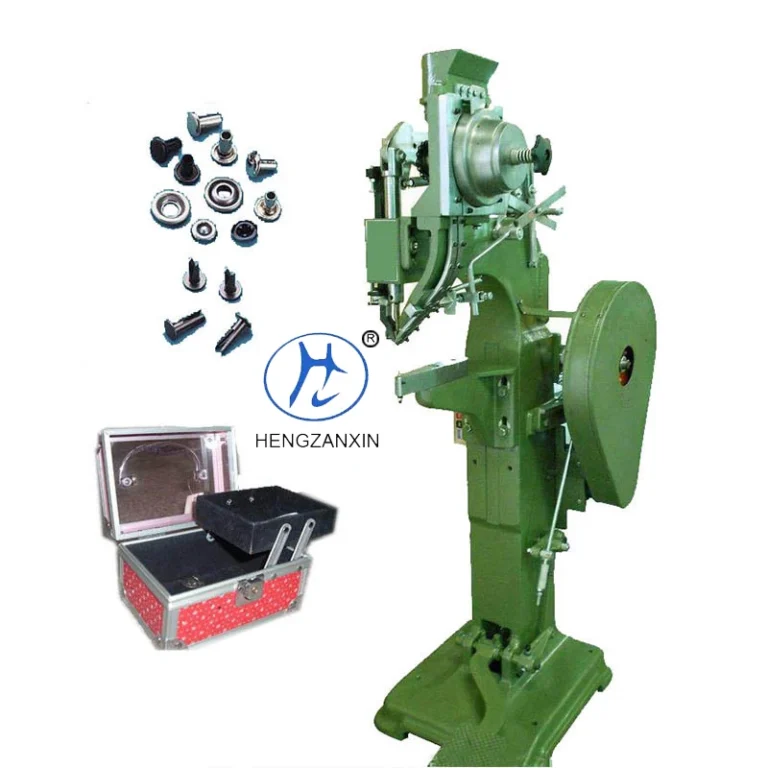
Cold forming allows factories to create many different fastener shapes. Let us look at the most common types of rivets used in modern manufacturing plants today. Semi-tubular rivets have a shallow hole at the tip, so they require less force to swing open. Full-tubular rivets have a deep hole through the body, which lets them punch through soft materials like plastic or leather without a pre-drilled hole. Solid rivets are solid metal bars that provide maximum strength for bridges and heavy vehicle frames. Self-piercing rivets cut their own path through metal sheets during the pressing action.
We also make complex shapes for specialized machinery parts. Shoulder rivets have a wide, smooth section that acts as a tiny axle. This design allows attached parts to rotate freely, which is essential for folding scissors or hinges. Fluted and knurled rivets have ridges on the shank to grip plastic walls tightly. Collar rivets come with an extra metal ring to space parts out. Our factory uses advanced multi-station cold heading machines to make these complex geometries with zero metal waste.
Choosing the Best Head Style for Your Product
The top head of the rivet must match both your strength needs and your visual goals. Button heads and oval heads sit slightly above the material surface. They are very popular because they distribute pressure across a wide area. Flat heads offer a clean look for industrial machinery frames. Countersunk heads sit completely flush with the metal surface, which is necessary for aerodynamic airplane wings or smooth laptop cases. If you make luxury leather purses or high-end clothing, you can choose decorative heads with stamped logos or slotted patterns that look like screws.
Let us look at a breakdown of head styles and where they work best:
| Rivet Head Style | Visual Profile | Primary Advantage | Common Industry Use |
|---|---|---|---|
| Button / Oval Head | Raised / Rounded | Excellent holding power | General hardware, automotive |
| Flat Head | Low / Blocky | Resists heavy shear force | Construction, heavy trucks |
| Countersunk Head | Flat / Flush | Creates a smooth surface | Electronics, aerospace hulls |
| Decorative Head | Custom / Shaped | Improves product aesthetics | Luggage, shoes, fashion gear |
6. HZX Non-Standard Customization Process and Benefits
Our Step-by-Step Customization Workflow
We do not believe in a one-size-fits-all approach to industrial machinery. When you need a specialized system, we follow a strict five-step non-standard customization workflow to guarantee quality. This process is engineered to ensure a high Return on Investment (ROI) for the end-user by optimizing the machinery for specific production needs.
- Requirement Submission: You send us your material drawings or mail your physical workpieces to our Dongguan factory.
- R&D Engineering: Our in-house engineering team analyzes your parts and designs custom feeding tracks and punch dies.
- Custom Mold Development: We use high-precision CNC machines to cut hard alloy steel into your unique mold shapes.
- Pre-Testing: We install the molds on your machine and run hundreds of test cycles to verify speed and safety.
- Plug-and-Play Delivery: We record a video of the machine working, pack it securely, and ship it to your workshop ready for use.
How Tailored Solutions Lower Your Operating Costs
Custom machinery might seem expensive at first glance, but it saves you an incredible amount of money over time. When a machine is tailored to your product, it stops making mistakes. You will see your material waste drop to nearly zero. Custom feeding molds also allow the machine to run faster, which increases your hourly output without adding extra workers to the payroll. Because the molds fit your hardware perfectly, the machine parts suffer less friction. This layout reduces your monthly maintenance costs and extends the working life of your equipment to its maximum potential.
Real-World Examples of Custom Success
We have helped hundreds of factories transform their production floors. For example, a folding chair manufacturer came to us because their workers were setting rivets too slowly by hand. We built them the HZX-R4250A Automatic Hardware & Folding Chair Riveting Machine with a custom dual-feed track. Their assembly speed jumped instantly. Another client makes professional roller skates. They needed to join thick plastic boot bases to hard metal blade frames. We designed the HZX-R5400SP Automatic Roller Skate Base & Sole Riveting Machine. This machine handles the strange angles of the shoe sole perfectly. We also made the HZX-R9250SP Automatic Skates & Mushroom Rivet Riveting Machine for their high-strength lock pins.
Our large ready stock plays a massive role in these success stories. When a factory in Thailand experienced a sudden breakdown with their old european equipment, they faced thousands of dollars in daily losses. They contacted us because we keep standard machines and raw mold blocks ready to go in our warehouse. Our team customized the feed system and shipped the new unit via express freight in just a few days. This rapid response saved their seasonal production contract.
7. Industry Applications and Real-World Success Cases
Automotive Component Assembly
The automotive world is incredibly tough on fasteners. Cars experience constant vibration, extreme temperature changes, and sudden impacts. Parts like brake pads, clutch plates, seat adjusters, and window wipers use cold-formed rivets to ensure they never separate. Our heavy-duty hydraulic machines give car parts suppliers the extreme force they need to secure these thick steel joints. The automated sensors double-check every press cycle, so no faulty parts leave the factory floor.
Electronics and Electrical Manufacturing
Electronics factories need speed, extreme cleanliness, and perfect accuracy. If a machine drops a tiny metal sliver inside a computer chassis, it can cause a short circuit that ruins the device. Our radial and orbital desktop riveting machines are perfect for assembling circuit breaker switches, computer cooling fans, and metal server racks. They apply force smoothly without cracking delicate green PCB boards or scratching shiny aluminum surfaces.
Hardware, Furniture, and Sheet Metal Fabrication
If you look closely at your office building, you will find rivets everywhere. Metal storage cabinets, server enclosures, aluminum ladders, and steel doors rely on automated riveting to stay rigid. Our multi-head machines are highly popular in the furniture industry. They can set three or four rivets along a metal rail simultaneously. This action eliminates twisting forces and ensures that every chair or cabinet frame stands perfectly straight.
Footwear, Luggage, and Leather Products
When you buy a luxury leather handbag or a pair of hiking boots, you expect the metal accents to last for decades. We love working with lifestyle brands because it lets us show our friendly side through beautiful product finishes. Leather is a soft material that can rip easily if you press it too hard. Our automatic eyelet and grommet machines punch clean holes and roll the metal back smoothly. This process leaves a soft, non-scratch surface inside your shoes and bags, so they never snag your socks or clothes.
Sporting Equipment Production
Sporting gear needs to survive extreme abuse from athletes. Roller skates, skateboards, and fitness equipment experience constant pounding on hard concrete. Our specialized HZX-R5400SP and HZX-R9250SP machines are famous in this sector. They use high-strength steel alloy pins to lock skate frames together tightly. This process keeps skaters safe during fast turns and high jumps.
Household Appliances and Kitchenware
Your kitchen is full of products held together by rivets. The metal handles on your frying pans, the inner drums of your washing machine, and the metal hinges on your microwave door all require precise fastening. These products handle high heat and moisture every day. Our stainless steel riveting solutions ensure these joints remain safe and rust-free throughout the entire lifespan of the appliance.
8. Conclusion: Start Your Automation Journey with HZX
Choosing the right rivets and riveting machines does not have to be a complicated or stressful task for your business. When you understand your material thickness, your production volume, and your accuracy needs, you can easily pick the perfect machine setup. Buying directly from a trusted source factory like HZX eliminates expensive middlemen, gives you access to elite in-house R&D customization, and ensures you receive a durable, high-ROI machine that arrives ready to work.
Do not let slow assembly speeds or frequent machine jams hold your factory back from growing its profits. Contact Hengzanxin (HZX) today by sending your product drawings or physical samples to our team. We will analyze your hardware and provide a free, comprehensive customized solution and a transparent quote within 24 hours. Let us help you upgrade your workshop with the best automation tools on the market!