What is a Riveting Machine: The Ultimate Guide to Industrial Riveting Solutions in 2026
Are you looking for the best way to join metal hardware, leather sheets, or electronic parts together? A riveting machine is an industrial tool that automatically installs rivets to create permanent, high-strength bonds between materials.
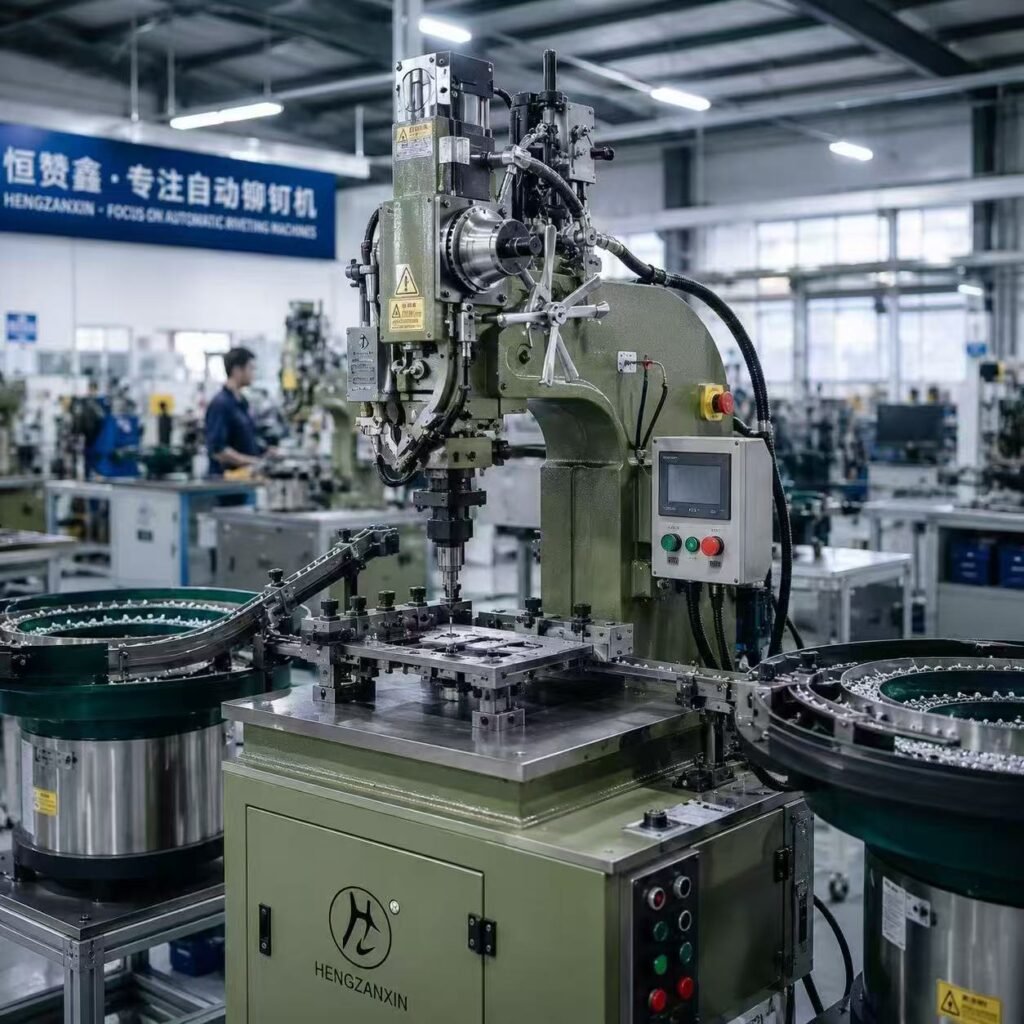
Table of Contents
- 1. Introduction to Riveting Machines
- 2. Main Types of Riveting Machines
- 3. Key Components of a Riveting Machine
- 4. How Does a Riveting Machine Work? (Operating Principles)
- 5. Benefits of Using Automatic Riveting Machines
- 6. Industrial Applications of Riveting Machines
- 7. Why Choose Hengzanxin (HZX) Riveting Solutions
- 8. How to Select the Right Riveting Machine for Your Production Line
- 9. FAQs
- 10. Conclusion
1. Introduction to Riveting Machines
1.1 What is a Riveting Machine?
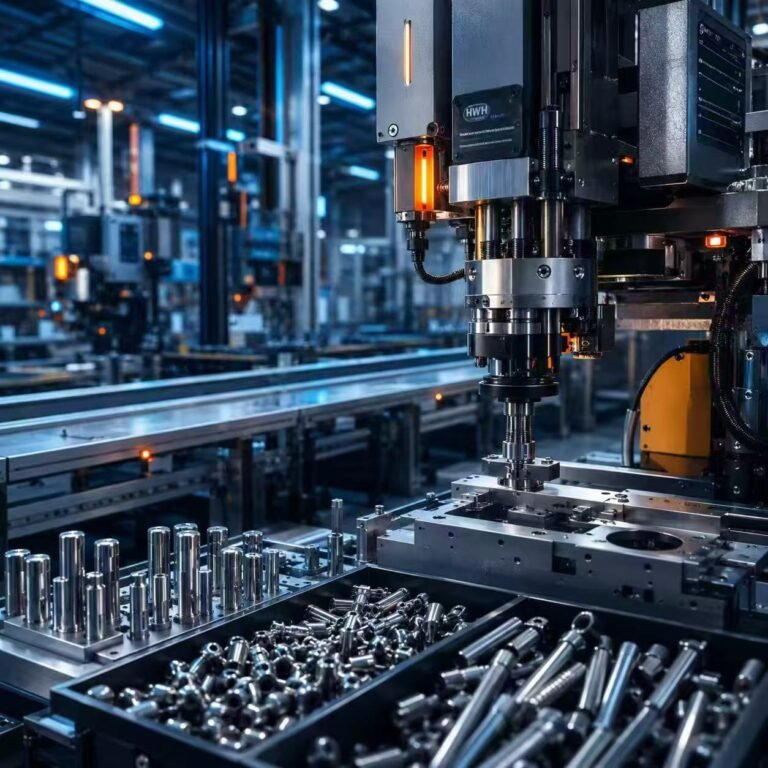
A riveting machine is a heavy-duty industrial tool. Factory workers use this machine to install rivets into pre-drilled holes. A rivet is a smooth metal pin. The machine presses the tail of the rivet. This force flattens the metal. Then, the machine forms a second head on the other side of the material. This action creates a permanent joint. The parts cannot separate easily after this process. We see these machines in many factories around the world. They handle parts for cars, electronics, and shoes. The machine replaces manual hammers and manual tools. It uses raw mechanical force to deform the metal pin. This makes the assembly process very strong and reliable.
1.2 Why Riveting Machines Matter in Modern Manufacturing
Modern factories must build products very fast. They must keep high quality at the same time. Manual riveting takes too much time. It also causes mistakes because workers get tired. Automatic riveting machines solve this problem by providing rapid and flawless assembly solutions. These machines can install thousands of rivets every single hour. They do not get tired. They apply the exact same pressure every time. This means every single product looks identical and holds together tightly. High-volume manufacturing lines depend on this equipment. It helps companies save money and avoid defects. Without these machines, mass production of metal parts and consumer goods would be too slow. It would also cost too much money for everyday businesses.
2. Main Types of Riveting Machines
2.1 Pneumatic Riveting Machines
Pneumatic riveting machines use compressed air to generate force. Air cylinders push the internal riveting tools forward. These machines are light and clean. They fit perfectly on small workbenches. Operators like them because they work quickly. They are excellent for light metals and thin plastic sheets. You do not need expensive hydraulic oil for these models. You only need a stable connection to a factory air compressor line. These machines handle small eyelets and small rivets very well. They require very little maintenance over long periods of operation.
2.2 Hydraulic Riveting Machines
Hydraulic riveting machines use liquid oil under high pressure. A hydraulic pump forces oil into a heavy cylinder. This action creates an immense amount of physical force. These machines are much stronger than pneumatic models. They can deform large, thick steel rivets easily. Factories use them for heavy-duty metal structures. Examples include truck chassis, large metal cabinets, and thick steel plates. The machine operates with a smooth motion. It does not make a loud striking noise like impact tools. This protects the structure of the surrounding material from cracking or bending during assembly.
2.3 Mechanical and Orbital Riveting Machines
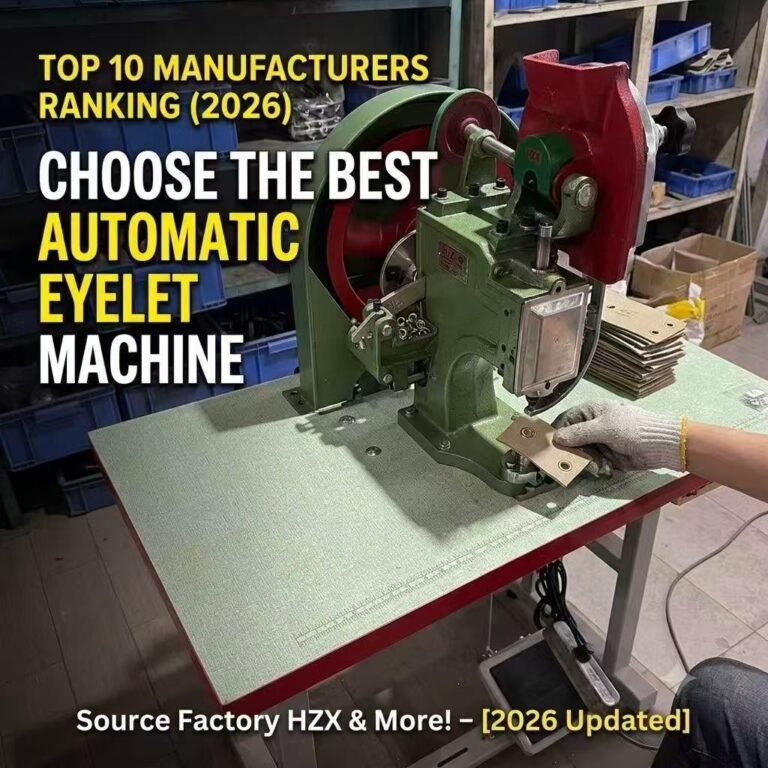
Mechanical riveting machines use a motor and a heavy flywheel. The flywheel stores kinetic energy. When the operator presses the foot pedal, a clutch engages. The machine releases all energy in a fraction of a second to drive the rivet down. Orbital riveting machines work differently. The riveting tool moves in a circular path at a specific angle. It touches the rivet tail and rolls it down gently. This process requires much less raw downward force. It creates a very smooth, polished finish on the rivet head. It is ideal for delicate assemblies like electronic circuits and moving hinges.
2.4 Automatic Riveting Machines
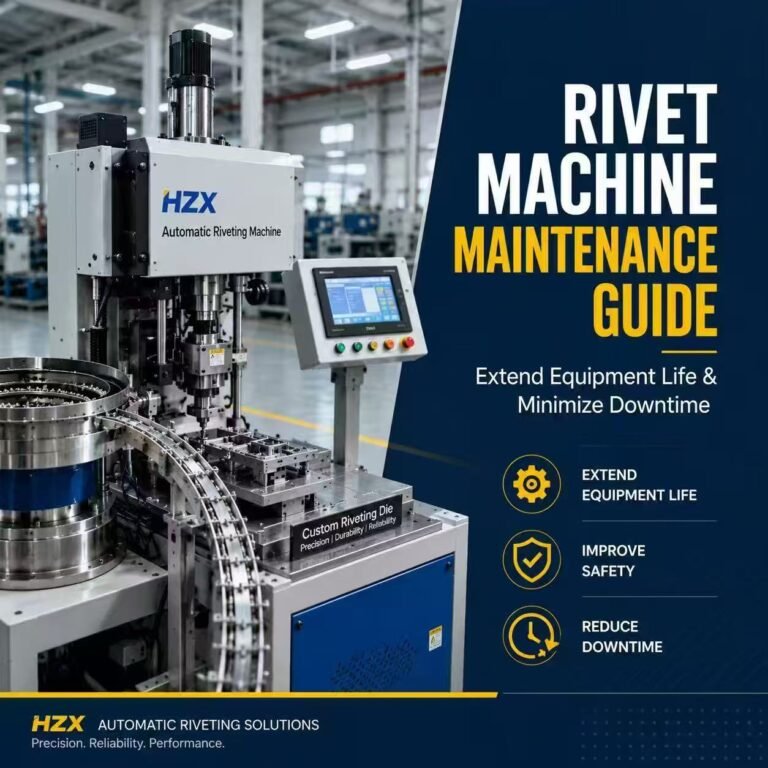
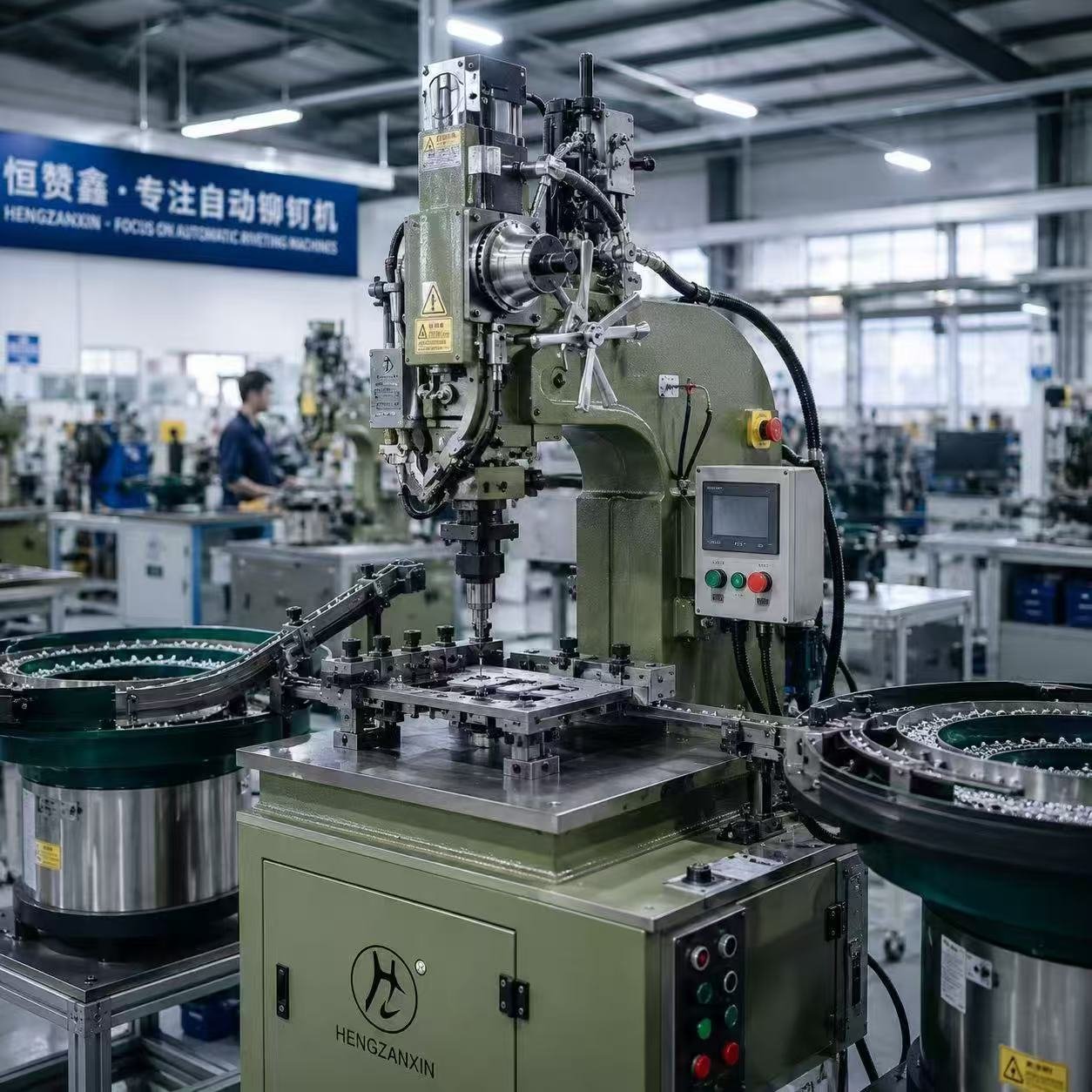
Automatic riveting machines are the most advanced models available today. An automatic riveting machine automatically feeds, aligns, and sets the rivet without human hands touching the fastener. The operator only places the raw material on the work table. The machine does all the remaining steps. It uses special vibrating bowls to align the rivets in a single row. Then, a mechanical track sends the rivets down to the gun head one by one. This eliminates the need for workers to hold small rivets with their fingers. It increases the speed of production by up to five times compared to manual machinery.
3. Key Components of a Riveting Machine
3.1 Feed Mechanism
The feed mechanism is the heart of any automatic system. It includes a large vibrating feeder bowl or a rotating hopper. Workers dump thousands of loose rivets into this bowl. The bowl vibrates continuously. This vibration forces the rivets to move upward along a circular track. The track separates the rivets so they face the exact same direction. After that, the rivets slide down a long metal guide rail. This rail delivers each rivet directly into the clamping jaws of the riveting tool. This system ensures a constant supply of fasteners without any jams.
3.2 Rivet Setting Tool / Riveting Head
The rivet setting tool consists of an upper die and a lower anvil. The upper die is also called the punch or the riveting head. It moves vertically up and down with great speed. The lower anvil stays stationary on the bottom work table. It supports the underside of your material. When the upper die travels downward, it strikes the rivet tail. The shape of the die determines the final shape of the rivet head. For example, it can make a flat head or a round mushroom head. These tools are made of hardened tool steel to resist wear and tear.
3.3 Power Source and Control Systems
Every industrial machine requires a stable power source. This can be an electric motor, an air compressor, or a hydraulic power pack. Modern machines also include an advanced electronic control system. This system usually features a Programmable Logic Controller or PLC. The PLC connects to a digital touch screen. Operators can adjust the pressure, the depth, and the cycle speed on this screen. Smart sensors monitor the system constantly. If a rivet gets stuck or the material is missing, the sensor stops the machine immediately to protect the operator.
4. How Does a Riveting Machine Work? (Operating Principles)
4.1 Step-by-Step Riveting Process
The machine follows a strict sequence of steps during every cycle. First, the automated feeding system drops a single rivet into the delivery jaws. Second, the human worker or a robotic arm places the workpiece over the bottom anvil. The worker aligns the pre-drilled hole with the target area. Third, the operator presses a foot pedal switch. Fourth, the upper driving cylinder moves down quickly. The jaws hold the rivet straight as it enters the hole. Fifth, the punch strikes the end of the rivet pin. The metal expands and fills the gap completely. Finally, the cylinder returns to its original top position, and the jaws open to receive the next rivet.
4.2 Automation and Quality Control Features
High-end modern machines contain advanced quality control tools. Laser guides project a red dot onto the work table. This helps the operator see the exact riveting location before pressing the switch. Some machines have digital pressure monitoring sensors. The sensor checks the amount of force used for every single rivet. If the force is too low or too high, the machine triggers an alarm sound. This indicates a bad joint. This feature prevents defective products from leaving your workshop. It keeps your customers happy and ensures perfect safety records.
5. Benefits of Using Automatic Riveting Machines
5.1 Efficiency and Productivity Gains
The primary benefit of an automatic riveting machine is the massive increase in manufacturing speed. A human worker can install maybe five or ten rivets per minute by hand. An automatic machine can easily install sixty to eighty rivets in that same timeframe. This means your factory can finish large customer orders much faster. You can increase your daily output without expanding the size of your building. This high efficiency gives your business a major advantage over competitors who still use slow, outdated manual assembly methods.
5.2 Strength, Precision, and Consistency
Hand tools often apply uneven pressure. This creates loose joints that can fail later. An automatic machine applies the exact same mechanical force every time. The depth of the rivet head is perfectly consistent across thousands of parts. This precision creates a very neat appearance on the final product. It also maximizes the structural strength of the joint. The connection can withstand heavy vibration and intense daily use. This is crucial for products like vehicles, office furniture, and consumer electronics where safety is vital.
5.3 Cost Savings and Reduced Labor
Labor costs are rising in every country. Hiring multiple workers to do manual assembly is very expensive. One automatic machine can replace three or four manual assembly workers. You only need one operator to load the parts into the machine. This reduces your monthly payroll expenses significantly. The machine also minimizes material waste. It does not bend or ruin rivets like untrained human workers do. These combined factors lead to a very high Return on Investment or ROI for your factory owners.
6. Industrial Applications of Riveting Machines
6.1 Automotive and Aerospace
The transport industry requires absolute joining reliability. Cars contain hundreds of riveted components. These include brake shoes, clutch plates, window regulators, and seat tracks. Airplanes use millions of specialty rivets to hold aluminum body panels together. Riveting is preferred here because it does not create intense heat like welding. Heat can weaken the structural properties of metals like aluminum. Riveting preserves the original strength of the metal sheets while keeping the weight of the vehicle low.
6.2 Electronics and Hardware
Electronics manufacturers use small, high-precision riveting systems. These machines handle tiny brass and copper rivets. You can find them inside computer chassis, power supplies, circuit board relays, and electrical switches. The machine must apply very soft, controlled pressure here. If the pressure is too harsh, it will shatter the delicate plastic casings or break the ceramic components. Automatic machines ensure that these tiny electrical pins are connected securely without causing any micro-cracks in the systems.
6.3 Apparel, Leather, and Consumer Goods
We see the results of riveting every day in our personal lives. Your leather shoes, canvas travel bags, denim jeans, and heavy luggage all contain small rivets and metal eyelets. They reinforce the pockets and corners so they do not rip apart under stress. Specialized sporting equipment also relies heavily on these machines. For example, roller skates require strong rivets to secure the hard plastic base plate to the soft fabric sole. Automatic eyelet and grommet machines handle these soft materials at lightning speed.
6.4 Furniture and Metal Fabrication
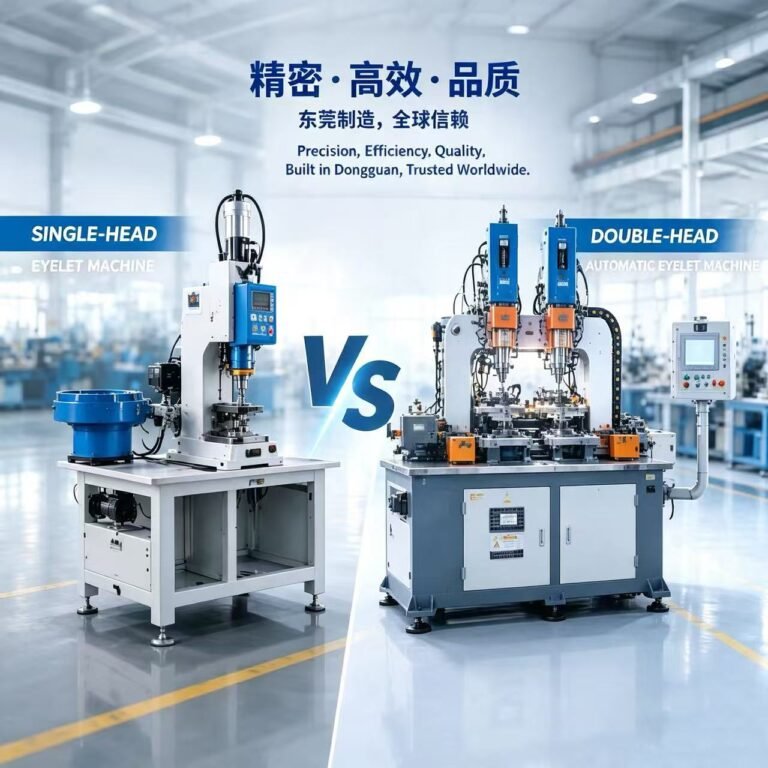
Metal furniture items like folding chairs, office tables, and storage racks require robust joints to support human weight. Manufacturers use automatic double-head riveting machines to assemble these frames. The machine can set two rivets simultaneously on both sides of a steel tube. This ensures the frame remains perfectly straight and level. Sheet metal fabrication shops also use these systems to build ventilation ducts, steel toolboxes, and outdoor server enclosures quickly and cleanly.
7. Why Choose Hengzanxin (HZX) Riveting Solutions
7.1 About HZX – 20+ Years Source Factory in Dongguan
Hengzanxin, known as HZX Rivet Machinery, is a highly specialized source factory. We have over twenty years of direct engineering and manufacturing experience. Our modern production facility covers an area of 3,000 square meters. It is located in Houjie Town, Dongguan City, Guangdong Province, China. This location is a famous global hub for industrial manufacturing. We use advanced CNC machine tools to build our equipment. We offer direct factory supply to our clients. This means there are no middle traders. You get the best industrial pricing directly from the source.
7.2 Flagship Automatic Riveting Machines
We manufacture a wide range of standard and specialized machines. Our models are engineered for durability and high precision. Below is a comprehensive list of our flagship machinery models and their industrial descriptions:
| Model Number | Machine Type / Description |
|---|---|
| HZX-R250SA | Heavy Duty Automatic Twin Riveting Machine |
| HZX-DR5TDA | 5-Ton Heavy Duty Automatic Double Head Riveting Machine |
| HZX-E150TA | Automatic Tabletop Eyelet Punching Machine |
| HZX-E135TA | Automatic Tabletop Eyelet Grommet Machine |
| HZX-R250-3SA | Automatic Triple-Head Hardware Riveting Machine |
| HZX-O06SP | Pneumatic Tabletop Orbital Riveting Machine |
| HZX-R5400SP | Automatic Roller Skate Base & Sole Riveting Machine |
| HZX-R9250SP | Automatic Skates & Mushroom Rivet Riveting Machine |
| HZX-R4250A | Automatic Hardware & Folding Chair Riveting Machine |
7.3 Non-Standard Customization Process
Every factory has unique production needs. Standard machines cannot always fit complex workpieces. That is why HZX focuses on Non-Standard Customization. This process guarantees a high ROI for your business. First, you submit your material drawings or send physical workpieces to our facility. Second, our in-house R&D engineering team designs a custom riveting layout. We create custom feeding molds tailored to the unique geometry of your hardware. Third, our engineers pre-test the entire setup before shipping it. This ensures the system is 100% ready for your line.
7.4 Plug-and-Play Delivery and Global Support
We ship all machinery as a complete plug-and-play solution. This means the machine arrives fully assembled. You only need to connect the power and air lines to start working immediately. This reduces your setup time significantly. We use robust export-standard packaging to protect the equipment during sea transit. We provide global logistical tracking so you can monitor your shipment. We offer 24/7 technical support with a fast 12 to 24-hour response window for quotes. All our high-precision equipment comes with a full 1-year warranty to ensure absolute stability in high-volume environments.
8. How to Select the Right Riveting Machine for Your Production Line
Choosing the correct equipment requires careful evaluation of your manufacturing goals. First, look at your material type and thickness. Thin leather bags require light pneumatic tools. Heavy steel sheets require massive hydraulic systems. Second, consider your production volume. If you build thousands of items daily, you must invest in an automatic feeding system. Third, evaluate the size of your rivets. If you use multiple rivet sizes, you might need a customized multi-head machine. Finally, look at your workspace. Tabletop models save space, while vertical floor models handle large, heavy frames easily.
9. FAQs
9.1 How does a riveting machine work?
The machine holds a rivet in its clamping jaws. An operator or robot places the material underneath. The machine pushes the rivet through a pre-made hole. A mechanical punch strikes the tail of the rivet pin. This forces the metal to expand outward. The expansion forms a tight, permanent head on the opposite side, which binds the materials together forever.
9.2 What are the main types of riveting machines?
The main industrial categories are pneumatic, hydraulic, mechanical, orbital, and fully automatic models. Pneumatic units use air for fast, light jobs. Hydraulic units use oil for heavy steel work. Orbital units spin gently for delicate parts. Automatic units handle the entire feeding and setting sequence without human touch.
9.3 What are the advantages of automatic riveting machines?
Automatic machines increase your daily production speed drastically. They apply perfectly consistent force, which ensures flawless structural joints every time. They reduce labor expenses because one machine can do the work of multiple manual laborers. They also minimize broken components and wasted materials.
9.4 Can riveting machines be customized for specific parts?
Yes. Specialized source factories like Hengzanxin can customize the feeding tracks, the upper punches, and the lower anvils. We use your exact material blueprints to build custom molds. This non-standard customization ensures that even complex or oddly shaped hardware components can be assembled automatically with high precision.
10. Conclusion
10.1 The Future of Automated Riveting Technology
In conclusion, automated riveting technology is evolving rapidly in 2026. Factories are moving away from noisy manual hammers toward smart, quiet, and fast automatic riveting systems. Investing in high-performance machinery from an experienced source factory like Hengzanxin ensures your manufacturing line remains highly productive, safe, and cost-effective. Contact our engineering team today to receive a custom quote and upgrade your workshop with our reliable plug-and-play assembly solutions.