Which Is Better for Your Factory: Spin Riveting Machines or Press Riveting Machines?
Table of Contents
- 1. Introduction
- 2. Understanding the Technologies
- 3. Head-to-Head Comparison
- 4. Industry Applications & Case Studies
- 5. Which One Should You Choose? Decision Framework
- 6. Why Choose Hengzanxin Riveting Machines
- 7. Common Questions (FAQ Section)
- 8. Conclusion
1. Introduction
Are you looking for the best riveting machines manufacture to upgrade your assembly line? Selecting the wrong riveting process causes serious part distortion, high reject rates, loud noise, and high energy costs. You must choose the right technology to protect your profits and product quality.
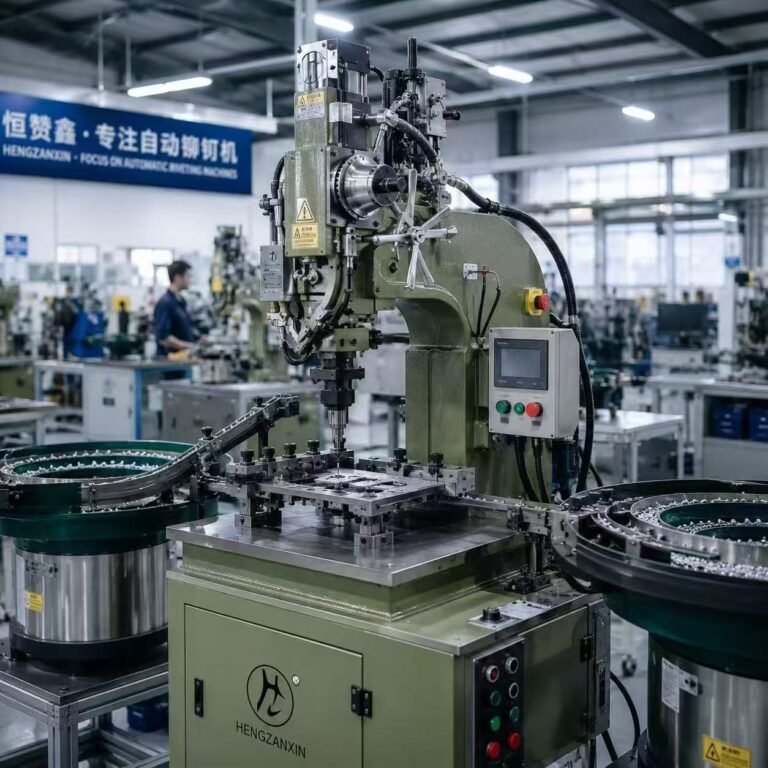
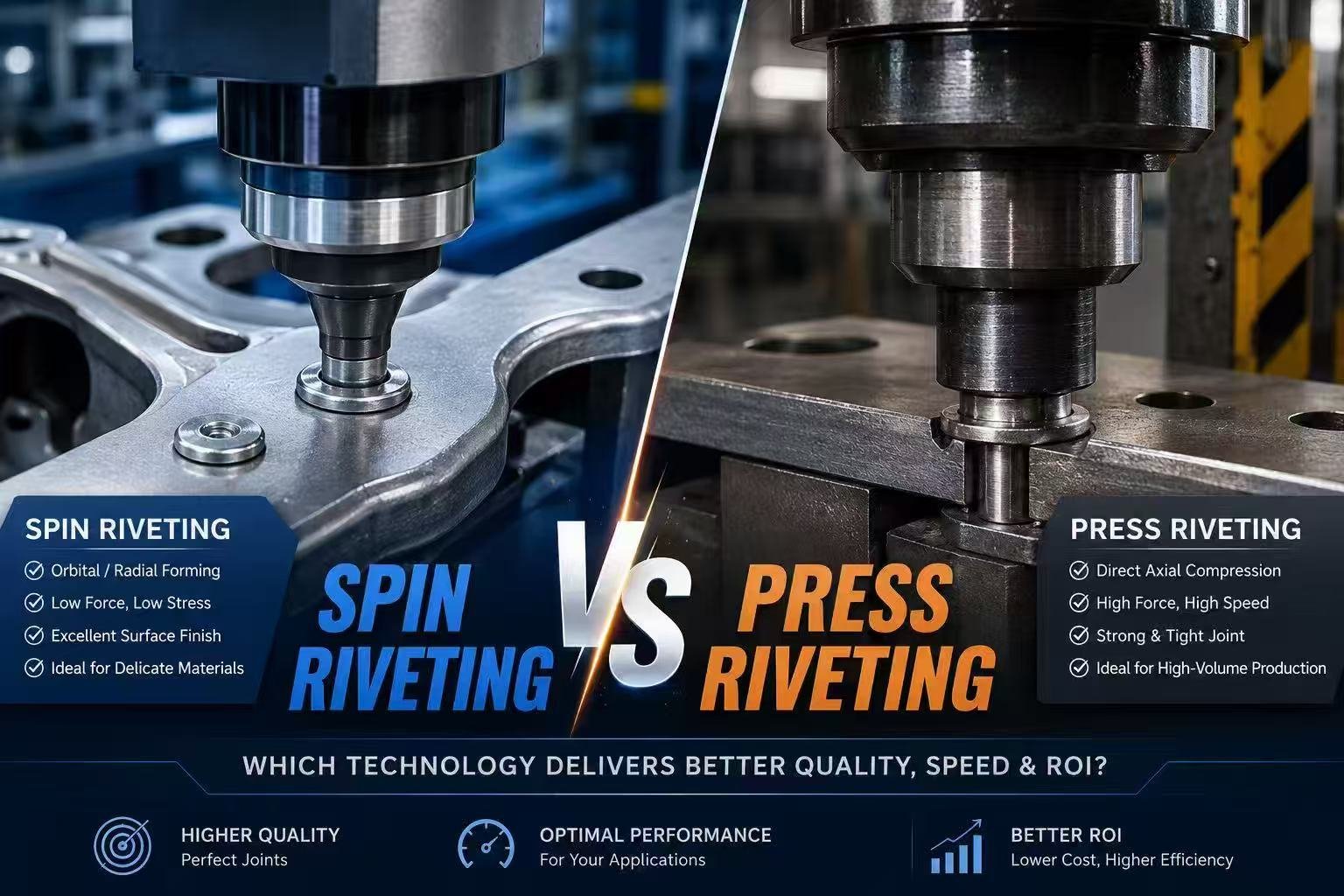
Factories use two main types of riveting technologies today. The first technology is spin riveting. People also call this orbital or radial riveting. This machine uses rotational cold forming to shape the rivet. The second technology is press riveting. People also call this squeeze or impact riveting. This machine uses direct axial compression to press the rivet down. Both methods are common in the top 10 manufacturing hubs worldwide. However, they work in completely different ways.
There is no universal best tool for every factory. The right selection depends on your specific material. It depends on your production volume. It depends on your joint quality requirements. It also depends on your budget. A professional riveting machines manufacture like Hengzanxin helps you analyze these factors. We build high-quality machines for different industrial needs. You can contact us today for a free machine consultation and expert recommendation.
2. Understanding the Technologies
What is a Spin Riveting Machine?
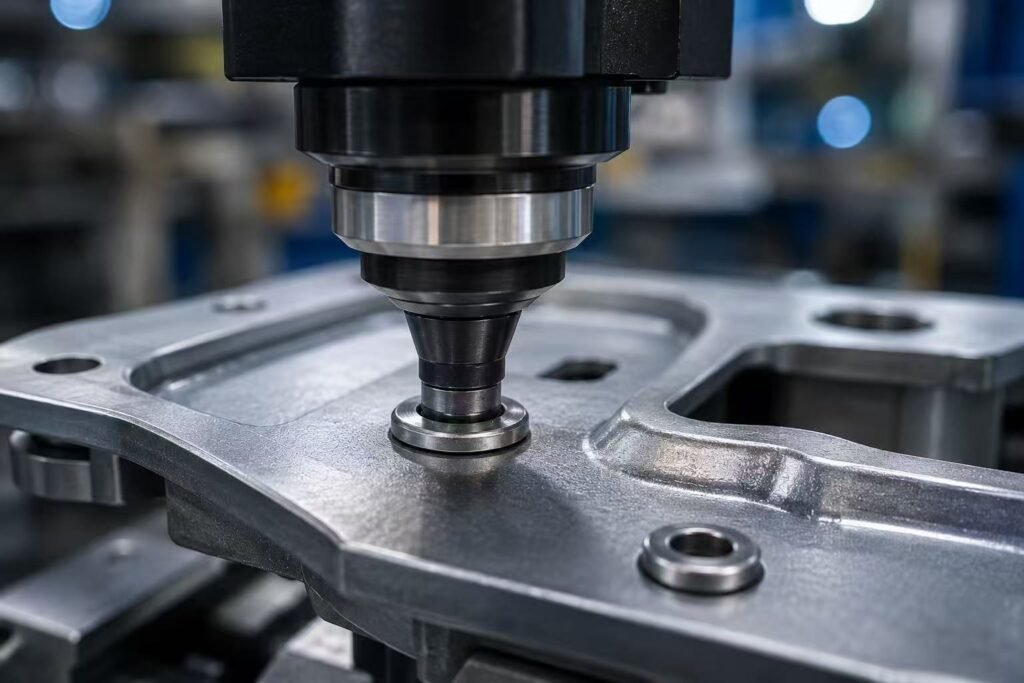
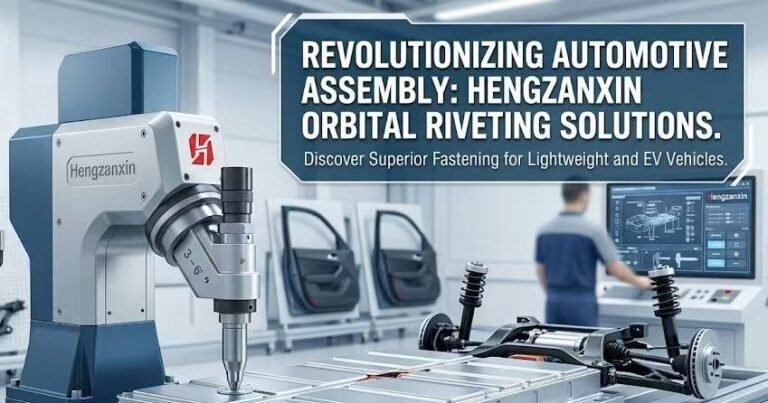
A spin riveting machine uses a unique forming process. The machine has a forming tool. People call this tool a peen. The peen holds a specific angle. This angle is usually between 3 degrees and 6 degrees. The machine motor drives the peen to spin. At the same time, the machine creates a downward pressure. The peen moves around the center point of the rivet. It creates an orbital or radial path. This action rolls the rivet material outward. This process is a cold forming process. It does not heat the metal. It moves the metal gently into the desired shape.
What is a Press Riveting Machine?
A press riveting machine works on a simpler principle. This machine applies a direct downward force. It does not spin. It does not move in an orbit. The machine uses a pneumatic system or a hydraulic system to push a die. The die hits or squeezes the rivet head directly along the central axis. This action flattens the rivet instantly. The force is sudden and high. It creates a tight joint by compressing the entire body of the rivet at one time.
Key Technical Comparison Data
Different machines require different operational settings. The table below shows the key technical parameters for both types of machines.
| Technical Parameter | Spin Riveting Machine | Press Riveting Machine |
|---|---|---|
| Force Requirement | Low force (Uses 80% less force than press) | High force (Requires full axial load) |
| Average Cycle Time | 2 to 15 seconds per rivet | 0.5 to 1 second per rivet |
| Noise Level | Very low (Below 70 decibels) | High (Often creates loud impact noise) |
| Material Stress | Minimal lateral stress | High downward and outward stress |
| Power Consumption | Low energy usage | High energy usage |
3. Head-to-Head Comparison
Automation Level & Operation
Spin riveting machines offer excellent control options. Modern spin machines include programmable computer systems. Operators can set the exact depth of the rivet. They can control the pressure speed. They can control the spinning time. This control makes spin machines perfect for delicate parts. The machine moves smoothly. It does not shock the assembly line. Automated robots can hold the parts easily during the spin process.
Press riveting machines are simpler to operate but they are less flexible. The operator sets the stroke distance or the pressure limit. The machine strikes the part hard. This strike creates a heavy vibration. This vibration can disturb automated sensors. It can also move delicate parts out of their correct position. You need strong fixtures to hold the parts steady during press riveting.
Speed & Production Volume
Press riveting machines win the speed race easily. A standard pneumatic press completes a cycle in 0.5 seconds. This speed is incredibly fast. If your factory makes millions of simple parts every month, press riveting is a great choice. It keeps your assembly line moving without any delays. Many factories in the top 10 high-volume industries choose press machines for this reason.
Spin riveting machines need more time. The spinning tool must touch the metal and roll it down gradually. A typical cycle takes between 2 seconds and 15 seconds. The exact time depends on the rivet diameter and the metal hardness. Spin machines are better for medium-volume production. They are also ideal for high-volume lines where quality is more important than raw speed.
Force Requirements & Material Impact
The orbital spin method reduces force requirements drastically. Spin riveting uses approximately 20% of the force that a press machine needs for the same rivet size. Why does this happen? The spin machine only presses on a small piece of the rivet head at any single moment. It moves around the head to finish the job. A press machine must flatten the whole rivet head at the exact same moment. Therefore, the press machine needs a massive cylinder and a huge amount of power.
This difference changes how the material reacts. High force from a press machine can distort thin metal plates. It can crack plastic components near the joint. It can also break ceramic or glass elements inside electronic parts. Spin riveting eliminates these problems. The low axial force does not bend the surrounding material. It leaves the part flat and safe.
Joint Quality & Aesthetics
Spin riveting creates a beautiful surface finish. The rolling peen polishes the metal as it forms the head. The metal grain flows smoothly around the joint. This uniform grain flow increases the fatigue strength of the joint. The rivet looks perfect and professional. This aesthetic quality is vital for visible consumer goods.
Press riveting leaves a rougher finish. The die hits the rivet hard and can leave tool marks on the surface. Sometimes the rivet head becomes uneven if the die is slightly unaligned. However, press riveting creates an incredibly tight structural joint. The high force expands the rivet shank inside the hole. This expansion fills the entire hole completely. This tight fit creates great resistance against shearing forces.
Noise, Energy & Safety
Spin riveting machines are quiet. The process is a smooth rolling action. It does not create an impact sound. The noise stays below 70 decibels. Workers do not need heavy ear protection near these machines. Spin machines also use smaller motors. They save a lot of electricity over a long year of production.
Press riveting machines are loud. Impact presses create a sharp bang during every cycle. This noise can damage worker hearing over time. Hydraulic presses are quieter than impact presses, but their large pumps run constantly. These large pumps consume a huge amount of electrical energy. This high consumption increases your monthly factory utility bills.
Portability & Footprint
Spin riveting machines have a compact physical design. They do not need massive steel frames because they do not handle high forces. You can move them around the factory floor easily. They take up very little space on your workbench.
Press riveting machines are heavy and large. A 10-ton hydraulic press requires a thick steel frame to survive the pressure. These machines take up a large footprint on your factory floor. You cannot move them without heavy lifting equipment like forklifts or cranes.
Cost Analysis & Tool Life
The initial investment for a spin riveting machine is usually higher. The machine has more moving parts, including a spinning spindle and angle bearings. However, the tool life is much longer. The peen does not experience violent impacts. It wears down slowly. Your maintenance costs will remain low for many years. This long tool life delivers an excellent return on investment.
Press riveting machines have a lower purchase price. The mechanism is simple and easy to build. But the tool life is shorter. The dies hit hard metal thousands of times every day. They crack or deform frequently. You must replace the dies often. This constant replacement increases your long-term operating costs.
4. Industry Applications & Case Studies
Where Spin Riveting Shines
Spin riveting machines are perfect for precision industries. The electronics sector uses spin riveting for circuit boards and micro-switches. The medical device industry uses it for surgical instruments because the joints must be smooth and clean. The automotive industry uses spin riveting for interior components like dashboard switches, seat recliners, and window adjusters. Aerospace companies use spin riveting for non-structural assemblies where material stress must remain zero.
Where Press Riveting Shines
Press riveting machines are dominant in heavy structural industries. Construction companies use them to join thick steel beams. The shipbuilding industry uses them for heavy metal plates. Automotive factories use large press machines to assemble chassis frames. Aircraft manufacturers use precise automatic press squeezers to secure fuselage panels. These joints must bear massive loads every day. They require the maximum tightness that only a direct press can provide.
Hengzanxin Success Stories
Hengzanxin is a leading name in the riveting machines manufacture market. We recently helped a major automotive parts factory. They were using press machines to assemble windshield wiper linkages. The high impact was cracking the plastic bushings. Their reject rate was 5%. We replaced their system with a custom Hengzanxin orbital spin riveting machine. The reject rate dropped to 0% immediately. The joint quality became completely consistent.
We also supplied a top 10 cookware manufacturer with our high-speed press riveting lines. They needed to attach handles to aluminum pans. The volume was massive. Our automated press machines delivered a 0.8-second cycle time. This speed allowed them to produce forty thousand pans every single day without any technical downtime.
5. Which One Should You Choose? Decision Framework
You can use this clear decision framework to choose your next machine. Look at your specific production needs and follow the guidelines below.
By Production Volume
- Low to Medium Volume (Under 500,000 parts per year): A spin riveting machine offers great flexibility. It allows you to change tools quickly for different products.
- Very High Volume (Over 2,000,000 parts per year): A press riveting machine is the best option. Its fast cycle time keeps your production cost per unit very low.
By Material Type and Thickness
- Thin, Brittle, or Dissimilar Materials: Choose a spin riveting machine. It will not crack plastic, ceramic, or thin aluminum.
- Thick Carbon Steel or Heavy Structural Plates: Choose a press riveting machine. It provides the deep force necessary to deform large steel rivets.
By Quality and Aesthetic Requirements
- Visible Consumer Joints: Choose a spin riveting machine. It creates a smooth, shiny, and round rivet head.
- Hidden Structural Joints: Choose a press riveting machine. It prioritizes internal hole expansion and raw holding strength over appearance.
Factory Type and Integration
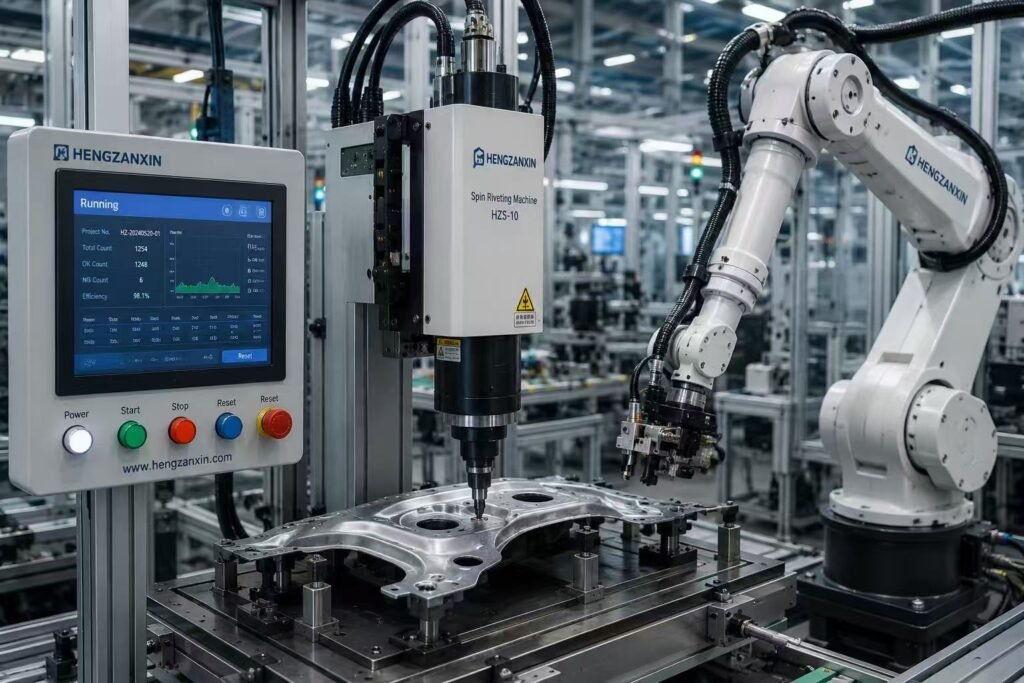
Startups and Small Enterprises often prefer spin machines because they are safe and do not require heavy factory infrastructure. Large modern factories use both types. They often integrate Hengzanxin machines with robotic arms. Our machines include standard electronic signal ports. A central computer PLC can control the machine easily. This integration creates a fully automatic production ecosystem.
6. Why Choose Hengzanxin Riveting Machines
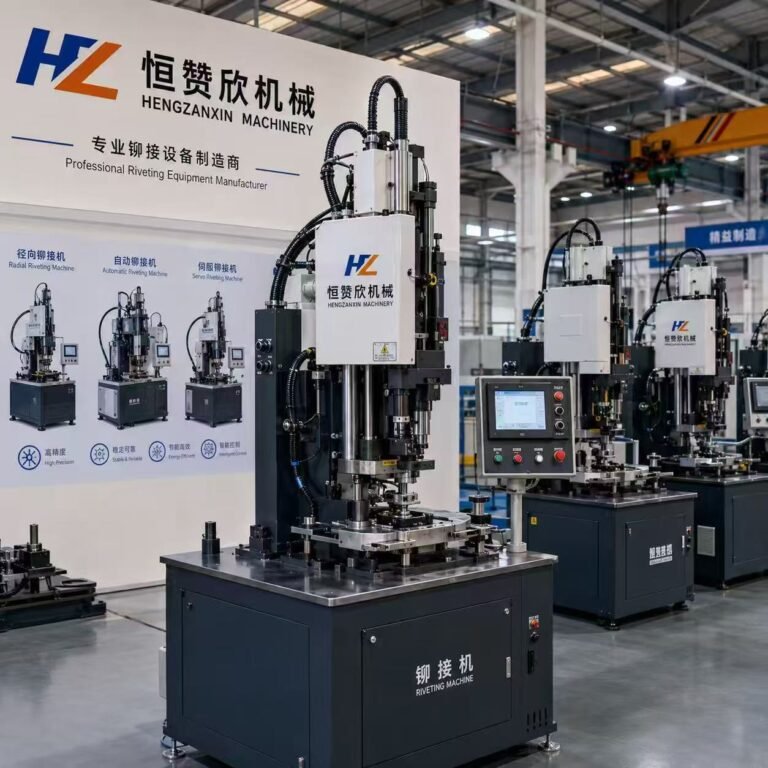
Hengzanxin is an experienced professional riveting machines manufacture factory. We possess over fifteen years of deep technical knowledge in cold forming technology. Our engineering team designs every machine with premium components. We enforce strict quality control tests before any machine leaves our facility.
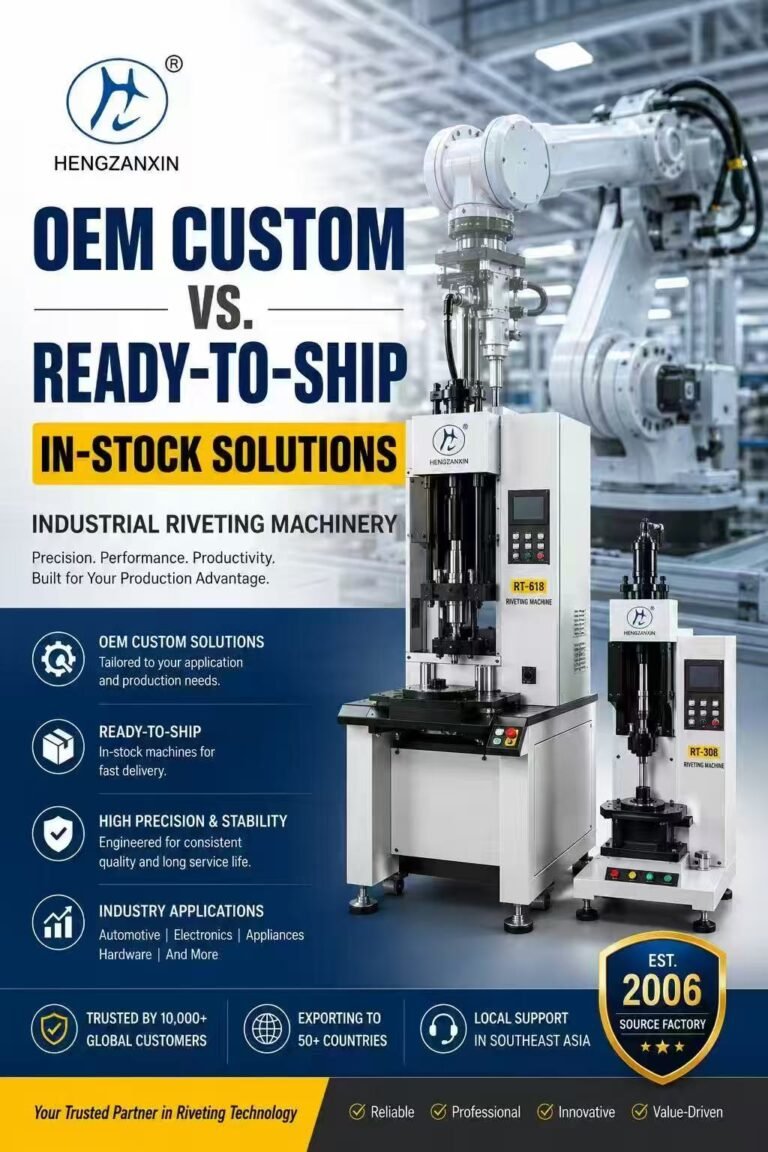
Our product lineup is comprehensive. We build pneumatic spin riveting machines, hydraulic orbital machines, and heavy-duty press systems. You can view our full portfolio on our official website at rivetmachinejl.com. We do not just sell standard machines. We specialize in custom fixtures and automated integration for your specific factory floor.
We provide full technical support to all our global clients. Our after-sales service includes operator training, spare parts delivery, and video technical troubleshooting. We hold multiple international certifications that prove our commitment to safety and engineering excellence. Contact our sales team today to schedule a live video tour of our factory or to request a detailed price quote for your project.
7. Common Questions (FAQ Section)
Can spin riveting machines connect to robots?
Yes. All modern Hengzanxin spin riveting machines include digital PLC signal ports. You can connect these ports to any industrial robot arm. The robot moves the part into place. Then the robot sends a signal to start the riveting cycle. The machine completes the cycle and tells the robot to remove the part.
What are the operator training requirements?
Training requirements are very low. The basic operation is simple. An operator only needs to load the part and press a dual-button safety switch. Setting up new tools or changing the PLC program requires about two hours of basic technical training. We provide free training videos with every machine delivery.
Is spin riveting best for aluminum or steel?
Spin riveting works wonderfully on both metals. It is exceptionally good for aluminum because aluminum is soft and can crack under sudden heavy impacts. Spin riveting shapes aluminum smoothly. For hard steel, spin riveting is also excellent because it reduces the required machine size by 80% compared to a traditional press.
What are the primary maintenance tips for a spin machine?
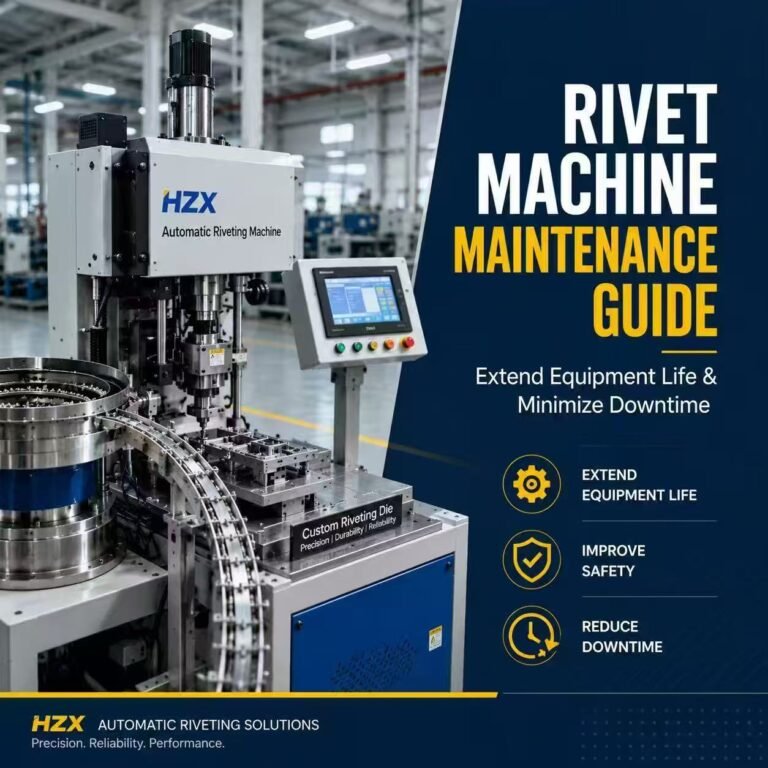
You must check the lubrication daily. The spinning head contains precision bearings that require high-quality grease. You must also keep the forming peen clean. Wipe away any metal dust from the tool head after every work shift. Inspect the air or hydraulic filters every month.
What power options are available for these machines?
We offer three primary power types. Pneumatic machines use factory compressed air and are great for small rivets. Hydraulic machines use oil pressure and provide high force for larger rivets. Servo-electric machines use electric motors for the ultimate precision control in high-tech manufacturing.
Can one machine handle multiple rivet sizes?
Yes. You can change the forming peen on a spin riveting machine in less than five minutes. This change allows you to work on different rivet diameters. You will only need to adjust the stroke depth and pressure settings on the main control panel.
8. Conclusion
Choosing between a spin riveting machine and a press riveting machine is a critical decision for your business. You must match the technology to your specific application to get the best production results. Spin riveting delivers unmatched precision, zero material distortion, and a beautiful surface finish. Press riveting provides extreme speed and heavy structural joint strength for high-volume factories.
Do not guess which machine is best for your assembly line. The expert team at Hengzanxin is ready to assist you right now. We will evaluate your sample parts and calculate the perfect technical specifications for your production needs. Contact us today through our website form, send us an email, or call our office to get your free personalized machine recommendation and price quote.